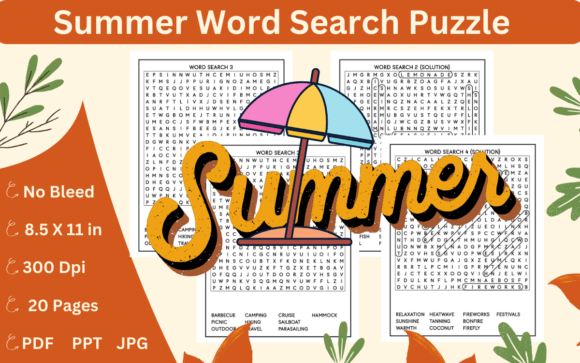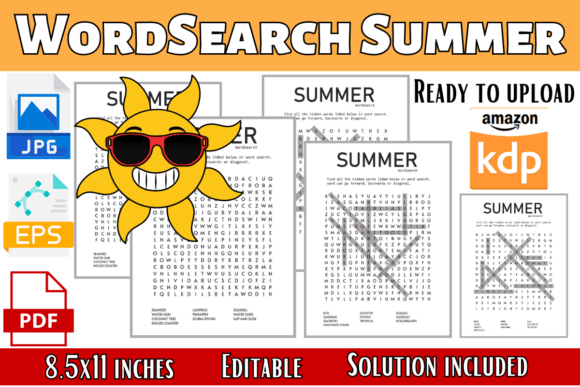
Summer Word Search Puzzle with Solutions
Summer word search puzzles are a fun and effective way to engage children in learning while keeping them entertained during the warm months. These puzzles, filled with hidden words related to summer activities, weather, and seasonal elements, offer an interactive experience that supports vocabulary development and spelling skills. Whether used as a classroom activity, a homeschooling supplement, or a family-friendly pastime, a summer word search puzzle with solutions can be a valuable addition to any educational or recreational routine.
The structure of a summer word search typically includes a grid of letters where words are hidden in various directions—horizontal, vertical, diagonal, and even backward. The challenge lies in identifying these words, which may include terms like "swimming," "camping," "picnicking," and "beach." By engaging with these puzzles, children not only improve their reading and recognition abilities but also develop patience and problem-solving skills.
How Summer Word Search Puzzles Fit Into Broader Processes
Summer word search puzzles can be integrated into a variety of workflows and planning stages. Before a project or task, they can serve as a warm-up activity to sharpen focus and mental agility. During a learning process, they provide a hands-on method for reinforcing concepts related to summer themes. After completing a task, they can act as a reward or a way to review key terms.
In educational settings, teachers might use summer word searches as part of a unit on seasons, weather, or outdoor activities. For parents, they can be a tool for incorporating learning into daily routines, especially during school breaks or long weekends. In business environments, they can be used as team-building exercises or as a creative break for employees working on summer projects.
Integration With Other Tools and Resources
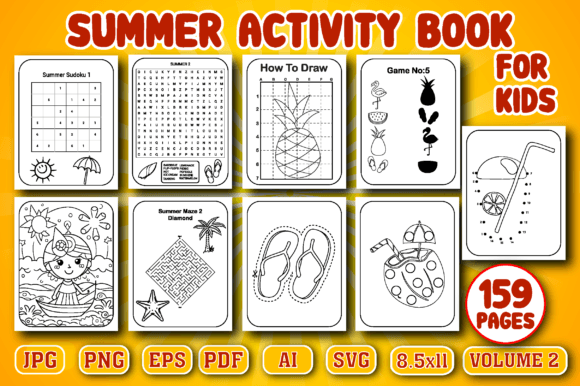
Summer word search puzzles work well alongside other educational tools such as flashcards, storybooks, and science experiments. They can be paired with a lesson on summer weather to reinforce vocabulary or combined with a nature walk to help children recognize real-world examples of the words they find in the puzzle.
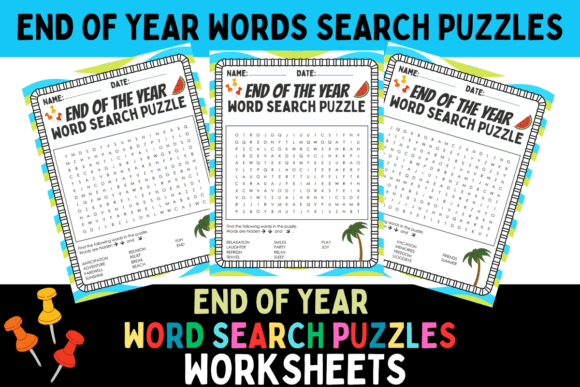
Online platforms and printable worksheets make it easy to access and share these puzzles. Many websites offer customizable options, allowing users to adjust the difficulty level or add specific keywords based on their needs. This flexibility ensures that the puzzle remains relevant and useful across different age groups and learning objectives.
Practical Implementation Tips
To get the most out of a summer word search puzzle, consider the following tips:
- Choose the right difficulty level: Select a puzzle that matches the child's reading ability and attention span. A puzzle that is too easy may lead to boredom, while one that is too hard may cause frustration.
- Set a time limit: Encourage focus by setting a reasonable time frame for completing the puzzle. This helps maintain engagement and prevents the activity from dragging on.
- Use it as a group activity: Involve multiple children or family members to turn the puzzle into a collaborative effort. This promotes teamwork and makes the experience more enjoyable.
- Combine with discussion: After solving the puzzle, talk about the words found and their meanings. This reinforces learning and encourages critical thinking.
- Print or digital format: Decide whether to use a printable worksheet or an online version based on convenience and accessibility. Both formats have their advantages depending on the situation.
Workflow Examples and Use Cases
For educators, a summer word search can be part of a lesson plan on seasonal changes. It can be introduced at the start of a unit to gauge prior knowledge, used during the unit to reinforce key terms, or assigned as a final activity to assess understanding. Teachers can also create custom puzzles using vocabulary specific to their curriculum.
Parents can incorporate the puzzle into a summer learning plan. For example, after a trip to the beach, they might use a word search to review words like "sand," "waves," and "sunshine." This connects the puzzle to real-life experiences and enhances retention.
Businesses or organizations hosting summer events can use word searches as part of a promotional campaign. They can be included in event materials, distributed as take-home items, or shared on social media to engage a broader audience.
Factors to Consider for Long-Term Use
When planning to use a summer word search puzzle regularly, consider factors such as preparation, usability, and consistency. Preparation involves selecting appropriate content and ensuring the puzzle aligns with learning goals. Usability refers to how easy it is for the target audience to access and complete the puzzle. Consistency ensures that the activity remains a regular part of the routine without becoming repetitive or stale.
Quality control is also important. Make sure the puzzle is free of errors and that the solution is accurate. This builds trust and ensures a positive user experience. Additionally, consider the long-term value of the puzzle. A well-designed puzzle can be reused across multiple sessions or adapted for different themes, maximizing its utility.
Conclusion
A summer word search puzzle with solutions is more than just a game—it's a versatile tool that supports learning, creativity, and engagement. By integrating it into daily routines, educational plans, or recreational activities, adults can help children make the most of their summer months. Whether used in classrooms, homes, or community settings, these puzzles offer a fun and effective way to build skills while enjoying the season. With thoughtful implementation and a focus on practicality, a summer word search can become a valuable asset in any workflow or learning process.