Petty Cash Log Book Interior for KDP
The Petty Cash Log Book Interior for KDP is a practical digital tool designed for individuals and businesses looking to maintain accurate records of their cash transactions. This interior is specifically tailored for self-publishing on platforms like Kindle Direct Publishing (KDP), making it an ideal resource for creators, entrepreneurs, and professionals who need a structured way to track expenses and income.
Understanding the Petty Cash Log Book Interior for KDP
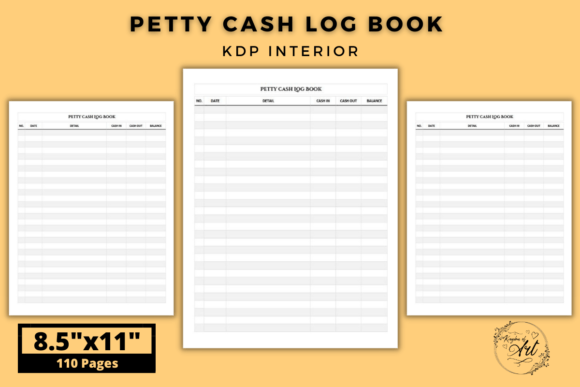
The Petty Cash Log Book Interior for KDP is a PDF file that features a blank table format with seven columns. Each page is designed to help users record essential details such as date, description, amount, and transaction type. This structured layout ensures that information is organized and easy to reference, making it an effective tool for managing daily financial activities.
This log book is available in a standard size of 8.5 x 11 inches, with 110 pages of blank ink and white paper. The high-resolution print-ready format allows for seamless uploading to KDP, ensuring that the final product meets professional standards. Additionally, the editable file offers flexibility for customization, enabling users to tailor the log book to their specific needs and preferences.
Integrating the Petty Cash Log Book into Daily Workflows
The Petty Cash Log Book Interior for KDP can be used at various stages of a project or task. Before starting a new initiative, it can serve as a planning tool to outline expected expenses and set financial goals. During the execution phase, it helps track actual spending, providing real-time insights into budget adherence. After completing a task, it can be reviewed to assess performance and identify areas for improvement.
For example, a small business owner might use the log book to monitor daily expenses, ensuring that cash flow remains consistent. A freelancer could track project-related costs, such as office supplies or travel expenses, to better manage their finances. In both cases, the log book acts as a reliable companion, supporting informed decision-making and financial accountability.
Compatibility with Other Tools and Resources
The Petty Cash Log Book Interior for KDP works well alongside other financial management tools. It can be used in conjunction with accounting software, spreadsheets, or mobile apps to create a comprehensive financial tracking system. By integrating the log book with these resources, users can streamline their workflow and reduce the risk of errors or omissions.
For instance, a user might input data from the log book into a spreadsheet for automated calculations or generate reports using accounting software. This synergy enhances efficiency, allowing users to focus on analysis rather than manual data entry. Additionally, the log book’s structured format makes it easy to import and export data, ensuring compatibility across different platforms.
Practical Implementation Tips
To get the most out of the Petty Cash Log Book Interior for KDP, consider the following tips:
- Consistency is key: Make it a habit to update the log book regularly, whether daily, weekly, or monthly. Consistent entries ensure accuracy and provide a clear picture of financial activity.
- Customize as needed: Use the editable file to add headers, labels, or notes that align with your specific requirements. This personalization can enhance usability and make the log book more relevant to your workflow.
- Review and analyze: Set aside time to review the log book periodically. Look for patterns, trends, or discrepancies that may indicate areas for improvement or potential issues.
- Combine with other tools: Pair the log book with budgeting apps, accounting software, or cloud storage solutions to create a robust financial management system.
Workflow Examples and Use Cases
The Petty Cash Log Book Interior for KDP can be applied in various scenarios, depending on the user's needs and objectives. Here are a few examples:
- Small Business Management: A local retailer might use the log book to track daily cash inflows and outflows, helping them manage inventory, payroll, and operational costs effectively.
- Freelance Projects: A graphic designer could use the log book to record expenses related to client projects, such as software subscriptions, printing costs, or travel expenses.
- Personal Finance: An individual might use the log book to monitor personal expenditures, ensuring they stay within budget and save money over time.
- Event Planning: A wedding planner could track all cash transactions related to an event, from venue deposits to vendor payments, ensuring transparency and accountability.
Factors to Consider for Long-Term Use
When using the Petty Cash Log Book Interior for KDP, several factors should be considered to ensure long-term effectiveness:
- Preparation: Before starting, define the purpose of the log book and determine what information needs to be recorded. This clarity will guide the setup and usage process.
- Usability: Choose a format and structure that aligns with your workflow. A well-organized log book reduces the likelihood of errors and improves overall efficiency.
- Organization: Keep the log book in a designated location, either physically or digitally, to prevent misplacement and ensure easy access when needed.
- Quality Control: Regularly check entries for accuracy and completeness. Address any discrepancies promptly to maintain the integrity of the data.
- Long-Term Use: Plan for how the log book will be used over time. Consider whether it will be updated regularly, archived, or shared with others.
Conclusion: Enhancing Financial Management with the Petty Cash Log Book Interior for KDP
The Petty Cash Log Book Interior for KDP is a valuable resource for anyone seeking to improve their financial management practices. Its structured format, customizable design, and compatibility with other tools make it a versatile solution for tracking cash transactions. By integrating this log book into daily workflows, users can gain greater control over their finances, make informed decisions, and achieve long-term financial stability.