Memory Games for Seniors: A Fun and Effective Way to Keep the Mind Sharp
As people age, maintaining cognitive function becomes increasingly important. Memory games for seniors offer a fun and engaging way to stimulate the brain, improve mental agility, and potentially slow the progression of memory-related conditions. These games come in various forms, from classic puzzles like Sudoku and crosswords to more modern digital challenges. Whether played alone or with others, memory games can be an essential part of a senior's daily routine, providing both entertainment and mental exercise.
One of the key benefits of memory games is their ability to enhance neural connections. Regular engagement with these activities can help improve recall, attention span, and problem-solving skills. For seniors, this means better retention of information, increased focus, and a greater sense of independence. Additionally, many of these games are designed to be accessible, making them suitable for individuals with varying levels of cognitive ability.
Types of Memory Games for Seniors
There are numerous types of memory games that cater to different interests and abilities. Some of the most popular include:
- Sudoku: A number-based puzzle that requires logical thinking and pattern recognition.
- Hangman: A word game where players guess letters to complete a hidden word.
- Word Puzzles: Challenges that involve finding hidden words, solving anagrams, or completing crosswords.
- Mazes: Navigation puzzles that test spatial awareness and decision-making skills.
- Calcudoku: A combination of Sudoku and arithmetic puzzles that require mathematical reasoning.
- Nurikabe: A logic puzzle that involves dividing a grid into regions based on numerical clues.
- Kakurasu: A puzzle that uses numbers to determine which cells should be filled in a grid.
These games not only provide mental stimulation but also offer a sense of accomplishment when completed. They can be tailored to suit individual preferences, ensuring that seniors remain engaged and motivated.
Benefits of Using Memory Games for Seniors
Memory games for seniors offer a range of benefits that extend beyond mere entertainment. Here are some of the most significant advantages:
- Cognitive Stimulation: Regular play helps maintain and improve cognitive functions such as memory, attention, and problem-solving.
- Emotional Well-being: Engaging in enjoyable activities can reduce stress, combat loneliness, and promote a positive mood.
- Social Interaction: Many memory games can be played in groups, encouraging social engagement and fostering connections with others.
- Improved Focus: The structured nature of these games helps seniors develop better concentration and perseverance.
- Enhanced Quality of Life: By keeping the mind active, memory games contribute to a more fulfilling and independent lifestyle.
These benefits make memory games an excellent addition to any senior's daily routine, especially when combined with other healthy habits like regular exercise and a balanced diet.
How to Incorporate Memory Games into Daily Life
Incorporating memory games into daily life doesn't have to be complicated. Seniors can start by choosing a few games that interest them and setting aside a specific time each day for play. Here are some practical tips:
- Set a Routine: Dedicate 15-30 minutes each day to playing memory games to build consistency.
- Use Physical Materials: Printed puzzles or books can be easier to handle and provide a tactile experience.
- Involve Others: Playing with family members or friends can make the activity more enjoyable and socially rewarding.
- Track Progress: Keeping a log of completed puzzles can help measure improvement and boost motivation.
- Explore New Games: Trying different types of puzzles keeps the mind challenged and prevents boredom.
By making memory games a regular part of their schedule, seniors can enjoy long-term cognitive benefits while also having fun.
Choosing the Right Memory Game for Seniors
Selecting the right memory game depends on individual preferences, cognitive abilities, and physical limitations. Here are some factors to consider:
- Difficulty Level: Choose games that are challenging but not overwhelming to ensure continued engagement.
- Accessibility: Opt for games that are easy to read, with clear instructions and large fonts if needed.
- Interest: Pick games that align with personal hobbies or interests, such as math, language, or logic.
- Portability: Consider whether the game can be easily transported or used in different settings.
- Support: Look for resources or guides that can help explain rules and strategies for more complex puzzles.
By taking these factors into account, seniors can find memory games that are both enjoyable and beneficial for their cognitive health.
Creating Your Own Memory Game Collection
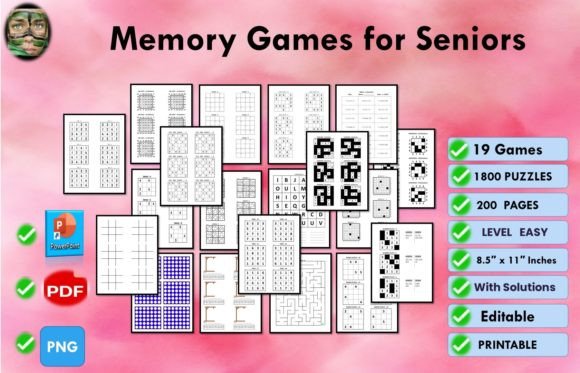
For those interested in creating their own collection of memory games for seniors, there are several options available. One popular choice is a ready-to-print book that includes a variety of puzzles, such as Sudoku, crosswords, and logic games. These books are often designed with high-resolution interiors and are formatted for KDP (Kindle Direct Publishing) uploads, making them ideal for self-publishing.
A typical memory game book might include:
- 202 pages of carefully curated puzzles.
- 8.5 x 11-inch dimensions for easy reading and handling.
- 100 editable pages that allow for customization and personalization.
- No bleed for clean printing and professional results.
- PDF, PPT, and PNG formats for flexibility in use and distribution.
These books are perfect for low or no-content businesses, as they require minimal effort to produce and can be uploaded directly to KDP for sale. With a wide range of puzzles, including four-in-a-row, hangman, and math equations, these collections offer something for every senior.
Why Memory Games for Seniors Are a Great Business Opportunity
The demand for memory games for seniors continues to grow as more people seek ways to maintain cognitive health. This presents a valuable opportunity for entrepreneurs, educators, and content creators looking to enter the market with minimal investment.
One of the biggest advantages of offering memory games for seniors is the low barrier to entry. With pre-designed and print-ready materials, creators can quickly launch a product without the need for extensive design work. Additionally, the versatility of these games allows for easy adaptation to different audiences, making them suitable for both individual consumers and institutional use.
For those interested in starting a business around memory games, it’s important to focus on quality, usability, and accessibility. Ensuring that the puzzles are well-structured, clearly presented, and free of errors will help build a loyal customer base. Positive feedback from users, such as five-star ratings, can further enhance credibility and attract new buyers.
By combining creativity with practicality, memory games for seniors can become a successful and rewarding venture for anyone looking to make a difference in the lives of older adults.